
 WhatsApp: +8615306204105
 Email: xuhejian@jelio.com.cn
JELIO ENGINEERING INSIGHTS
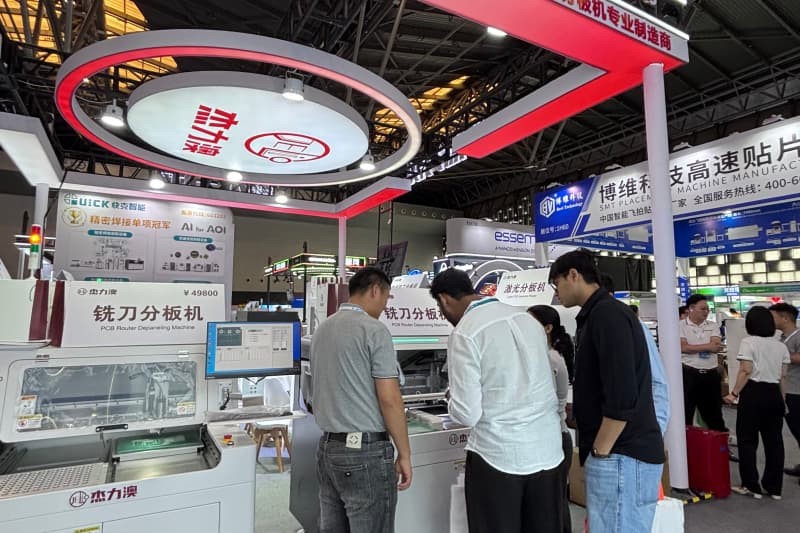
JELIO Connects with Global Customers at Trade Show
JELIO’s original exhibition update reported conversations with existing and prospective customers about PCB depaneling accuracy, throughput and board handling. EMS and OEM engineering teams discussed their manufacturing requirements with JELIO application engineers, while feedback on fixtures, dust collection and software was collected for product-development review. This article retains that company update and adds a practical follow-up guide for buyers continuing a technical conversation. Use it to turn a promising booth discussion into a clear application brief, a sample-testing request and a proposal scope that your process, automation and purchasing teams can review together.
What should follow a depaneling discussion at a trade show?
Send a controlled application brief with the panel drawing, component layout, material and thickness information, required output handling and quality criteria. Refer to the machine family discussed, then request a sample review and a written configuration proposal. Keep the drawing revision, sample identity and open technical questions together so engineering and purchasing evaluate the same application.
What JELIO reported from the exhibition
The original company report describes JELIO participating in an industry exhibition to meet existing and prospective customers and discuss manufacturing challenges. Engineering teams from EMS and OEM businesses visited the booth to ask about cutting accuracy, throughput and board handling for different PCB types. JELIO application engineers provided feasibility discussions and proposed equipment configurations based on the requirements visitors brought to the booth.
Those conversations also covered after-sales support, sample testing and spare-parts availability. JELIO’s R&D representatives joined technical seminars addressing laser processing for thin substrates and MES connectivity for production data management. Feedback about extraction arrangements, fixture designs and software features was collected for the product-development team. These are the subjects recorded in the original update, with the original publication date retained above.
For a buyer returning to a real project after the exhibition, the useful next step is to separate the initial equipment discussion from the application decision. A machine demonstration introduces a process. The equipment proposal still needs the released drawing, assembly constraints and intended production workflow. The following sections provide a way to organize that follow-up through JELIO technical support.
Translate the conversation into a panel brief
Start the brief with the product revision and panel layout. Identify the finished board outline, separation tabs or V-score locations, datum features and relevant drawing limits. Include the populated-board layout on both sides. Component height and position matter to the fixture and cutter approach, so the outline drawing alone is rarely the whole application package.
Describe the material and thickness as they appear in your actual project documentation. If a product family includes several panel variants, list the differences rather than describing every panel as equivalent. Mark the most restrictive geometry and the variant that represents the intended production workload. Engineering can then see what the initial machine recommendation must cover.
Keep the inquiry specific without assuming a configuration. A photograph of the current setup can help explain orientation and access, but it should accompany the drawing and requirement list. Link the request to the relevant JELIO product family so the technical discussion begins with the process that interests your team, then let the sample review determine the proposed setup.
| Buyer question | Input to attach | Decision supported |
|---|---|---|
| Which panel must be separated? | Released drawing and revision | Process and envelope review |
| What is close to the cut? | Populated top/bottom layout | Fixture and component-clearance review |
| Where do boards go next? | Output orientation, receiving tray or next station | Handling configuration |
| How will quality be accepted? | Drawing limits and inspection locations | Sample-review scope |
| What remains open? | Numbered questions with an owner | Technical follow-up and quotation |
Keep the demonstration and quotation configuration connected
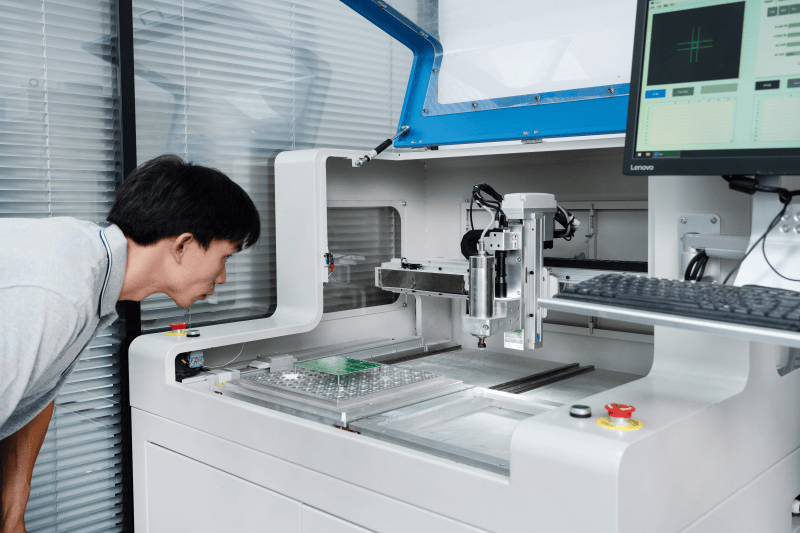
At an exhibition, several machines and demonstrations may be discussed in a short time. Record which model family was recommended for your panel and which items were part of that recommendation. Separate the base equipment from a proposed fixture, tool-change option, extraction arrangement and output handling. This keeps the follow-up discussion aligned with the equipment your company is considering purchasing.
The JLO-C3532 / JLO-C5045 router catalog below supplies a concrete example of model-specific screening data. It distinguishes single-station panel size, component height, cutting accuracy and repeatability. These published fields help screen an application; they do not describe a sample result from the exhibition or establish that a particular visitor’s board was tested.
For a proposal that changes the standard arrangement, involve customization support early. Describe the operational requirement, including what arrives at the input and what must leave the output. A requirement-led discussion is easier to review than a list of assumed features assembled from several different demonstrations.
Ask for a sample record that answers the open questions
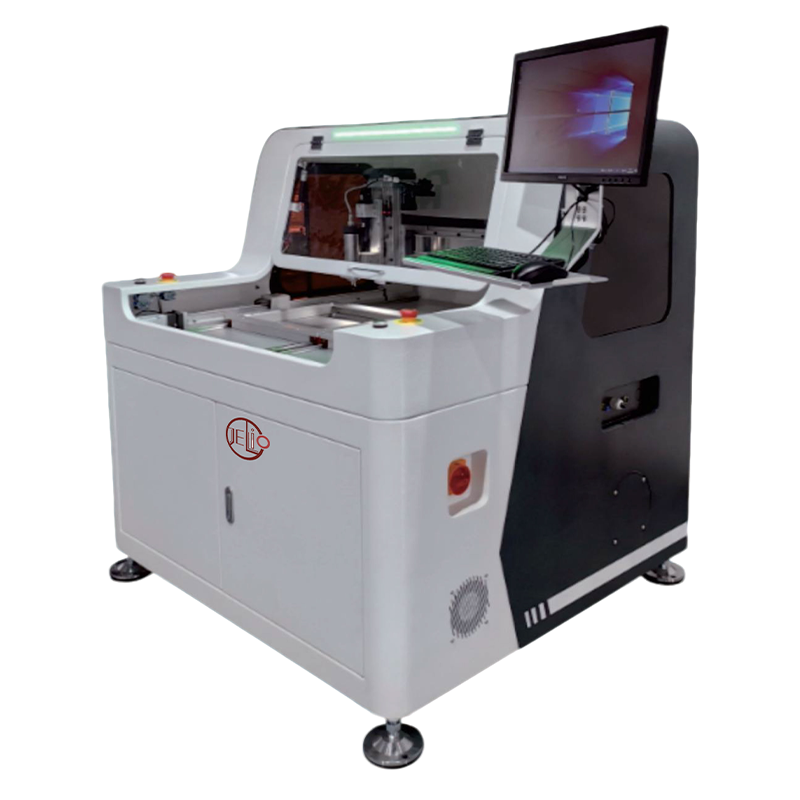
JELIO’s technical-support service lists free sample cutting, full-process video, microscope edge analysis, dimensional verification and a machine recommendation report. Use those available deliverables to resolve the application questions that were difficult to answer at the booth. Identify which edge locations, drawing dimensions and handling steps your team wants to review.
Link every observation to a sample ID and drawing revision. For dimensional checks, specify the datum and characteristic rather than asking only whether the machine is accurate. For cycle review, agree a start and finish boundary that includes the handling scope you are evaluating. The sample-test checklist provides the more detailed record.
After the trial, collect the selected machine configuration and any setup revisions with the results. Purchasing should be able to identify the same fixture, tool-change arrangement and extraction scope in the quotation. If an application issue is still open, state the next action and responsible reviewer rather than treating the exhibition conversation as acceptance.
Bring automation and service owners into the follow-up
MES, fixtures and dust collection were among the subjects in JELIO’s original report. Assign those questions to the people who will operate or integrate the equipment. The automation engineer should describe the required data exchange and receiving process; quality should define inspection records; maintenance should review access, consumables and the support information required at handover.
This application-wide view is also visible in the Cencorp depaneling overview, which discusses equipment together with output handling and traceability. Use that as a reminder to review the complete workflow. The JELIO proposal must still be defined by JELIO’s own product data and the written project scope.
Finish the follow-up with a concise review record: accepted inputs, proposed machine configuration, sample evidence, unresolved items and the requested quotation scope. Share the same revision across process engineering, quality and purchasing. Your next commercial action can then address a clear application instead of restarting the technical discussion.
From customer discussion to a reviewable proposal
Agree what needs investigation
Give each requirement a source
Connect the result to a proposal
A booth conversation and a technical follow-up answer different questions
| Subject | At the exhibition | In the follow-up brief |
|---|---|---|
| Process fit | Discuss possible equipment families | Attach actual panel and assembly drawings |
| Quality | Review the demonstration | Define drawing and edge-inspection criteria |
| Handling | Discuss desired automation | Describe input, output and orientation |
| Configuration | Identify interesting options | Record what the proposed quote includes |
| Next action | Exchange project interests | Assign a sample review and technical owners |
Published specifications for the application review
JLO-C3532/JLO-C5045: source catalog values for this product family.
| Parameter | Published value |
|---|---|
| Model | JLO-C3532/JLO-C5045 |
| Max. PCB Depaneling Size | 350mm(X)*320mm(Y)(Single Station)/500mm(X)*450mm(Y)(Single Station) |
| PCBA Component Height | Upper:15mm Lower:45mm |
| Cuttable PCBA Thickness | 0.5~4mm |
| Spindle Tool Range | φ0.5~3mm |
| Cutting Accuracy | ±0.05mm |
| Repeatability | ±0.02mm |
A practical exhibition follow-up sequence
- 01
Identify
Name the panel and machine family discussed.
- 02
Prepare
Send drawing, assembly and handling inputs.
- 03
Review
Resolve feasibility and configuration questions.
- 04
Test
Evaluate agreed samples and inspection evidence.
- 05
Quote
Request the same scope in the equipment proposal.
Frequently asked questions
What did JELIO discuss with customers at the exhibition?
The original update records discussions about depaneling accuracy, throughput, board handling, sample testing and after-sales support. Feedback on dust collection, fixture designs and software was collected for product-development review.
What should an EMS buyer send after the event?
Send the released panel drawing, assembly layout, material and thickness information, quality criteria and intended input/output workflow. Identify the model family discussed and the questions that remain open.
Can a booth demonstration replace sample testing?
A demonstration introduces the process. Your own populated panel, drawing requirements and handling scope provide the basis for an application-specific review and documented acceptance criteria.
How do I follow up on MES or handling requirements?
Prepare a required-data list and a description of the input/output sequence. Match the request to the selected JELIO model’s published configuration and discuss any additional integration scope with the team.
How do I request the next technical step?
Contact JELIO technical support with the panel brief and sample-review objectives. Keep the drawing revision, configuration questions and commercial scope together so the quotation follows the same application.
Related equipment and guides
Discuss your panel requirements
Continue the exhibition conversation with your panel drawing, assembly layout and open technical questions.
Discuss your panel requirements →


