

JELIO ENGINEERING INSIGHTS
JELIO Presents PCB Depaneling Solutions at Industry Exhibition
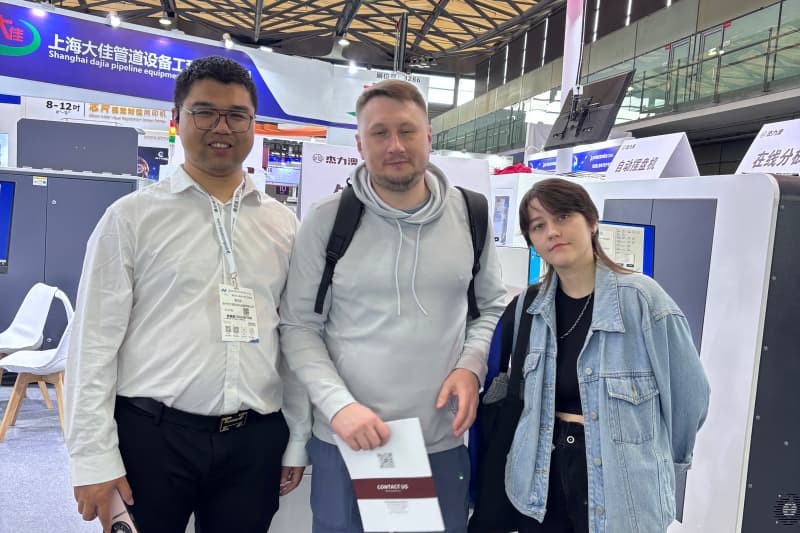
JELIO’s original exhibition report described a portfolio of router, guillotine, laser and integrated depaneling equipment presented to electronics-assembly visitors. Demonstrations and technical discussions covered combined router-and-saw cutting, multi-mark CCD compensation and options for connecting depaneling with peripheral equipment. This updated article retains the company’s exhibition account and explains how a buyer can evaluate those different technologies without mixing their application limits. Use the accompanying questions, comparison and catalog reference to connect an interesting demonstration with the actual panel drawing, component layout and output requirements of your project.
What should a buyer check in a PCB depaneling demonstration?
Identify the cutting mechanism, panel revision, fixture and selected machine configuration first. Then observe positioning, separation and output handling, and ask which drawing characteristics will be inspected. Compare the demonstration with the proposed model’s own specifications. For a purchasing decision, arrange a trial using your panel rather than treating another demonstration board as evidence for your application.
The equipment portfolio described in the original report
JELIO reported exhibiting depaneling equipment at an international electronics-manufacturing trade show. The portfolio included router, guillotine, laser and integrated systems. Live demonstrations featured combined router-and-saw machines, and the multi-mark CCD vision system with automatic path correction was presented to visitors interested in cutting accuracy.
The report also describes interest in laser depaneling from manufacturers working with flexible circuits and thin substrates. Tray loaders and glue dispensers were discussed as peripheral equipment for production integration. Technical staff spoke with visitors from automotive electronics, semiconductor packaging and consumer-electronics fields, alongside discussions of customization and technical support.
These subjects introduce different application decisions. A buyer can use the report to identify relevant JELIO product categories, then move to the individual machine page for the actual operating envelope and configuration. The sections below provide questions for that next step rather than treating the entire exhibition portfolio as one machine specification.
Watch how milling and saw cutting serve different geometry
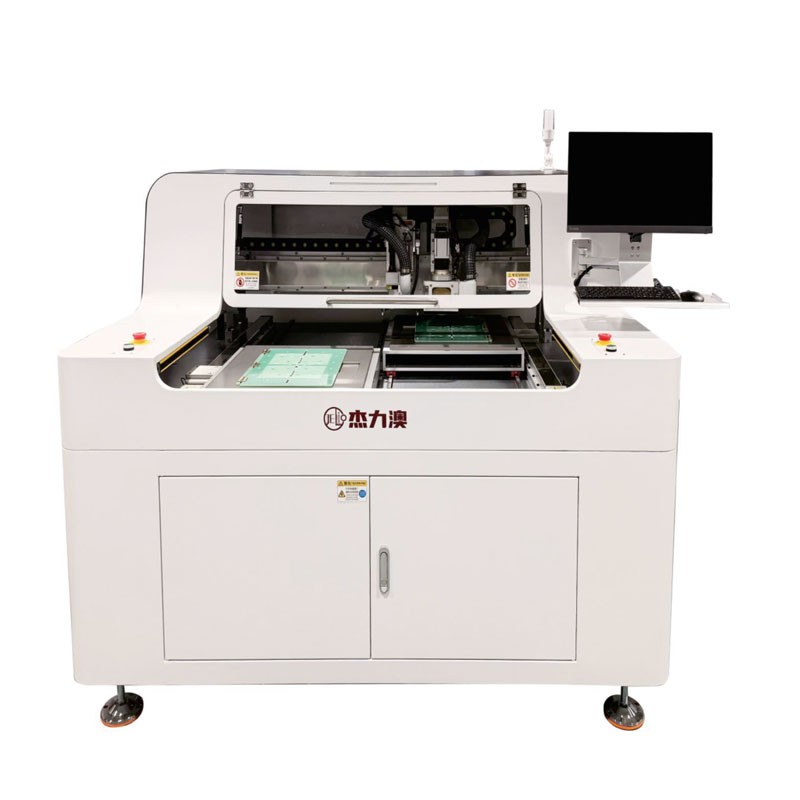
On an integrated machine, first identify which parts of the panel are routed with a milling cutter and which are cut with the saw. The JLO-CXJ3235 / JLO-CXJ4550 catalog describes straight, L-shaped, U-shaped, circular and arc milling functions, while its saw cutting function is listed as straight line. The two operations should therefore be reviewed against distinct parts of the proposed board outline.
Ask the demonstrator to explain panel support before and after separation. A board may remain secure during a toolpath but need a separate strategy for pickup and transfer. Note component position on both sides and the clearance required by the actual selected tool. Record whether the proposed fixture represents the populated product you will manufacture.
The integrated router-and-saw page lists the source parameters reproduced below, including per-station panel size, component height, milling-tool range and saw-blade dimensions. Those are configuration screening values. A sample review connects them with your own drawing and quality criteria before you request an equipment proposal.
Review camera compensation and dimensional inspection separately
CCD compensation was one of the functions described in the exhibition report. In the related integrated product catalog, mark compensation is described as camera recognition, positioning and automatic compensation. A useful demonstration question is how the panel reference is recognized and how the program relates to that reference.
Keep the camera function, cutting specification and finished-board inspection in separate parts of the review. A camera pixel count does not supply the datum definition or actual dimensions of a cut board. Use the accuracy and repeatability guide when quality and purchasing need to compare the catalog fields without combining them.
For a trial, identify the drawing feature to measure, the sample board and the measurement method. Request the configuration and program revision with the results. If the trial includes a changed fixture or updated compensation setup, retain that revision so the machine proposal can be compared with the condition that produced the evidence.
Evaluate laser as its own process and model
Laser depaneling deserves a separate application discussion when the panel geometry, material or component arrangement suggests a non-contact process. JELIO’s exhibition report records interest in thin substrates and flexible circuits. For an actual shortlist, the JLO-CL3030 product page is the source for that model’s panel envelope, thickness field and wavelength.
The LPKF laser-process explanation describes material removal by a focused beam and the role of extraction. This is useful process context. It should not be used to assign another manufacturer’s speed, cleanliness outcome or material range to the JELIO machine you are evaluating.
Ask for a representative sample with the proposed material stack and the drawing data required for programming. Review the cut edge, dimensions and output condition according to your project criteria. Compare the resulting application record with the laser configuration being quoted rather than choosing solely from an attractive demonstration or a headline performance field.
Include trays and dispensing in the production discussion
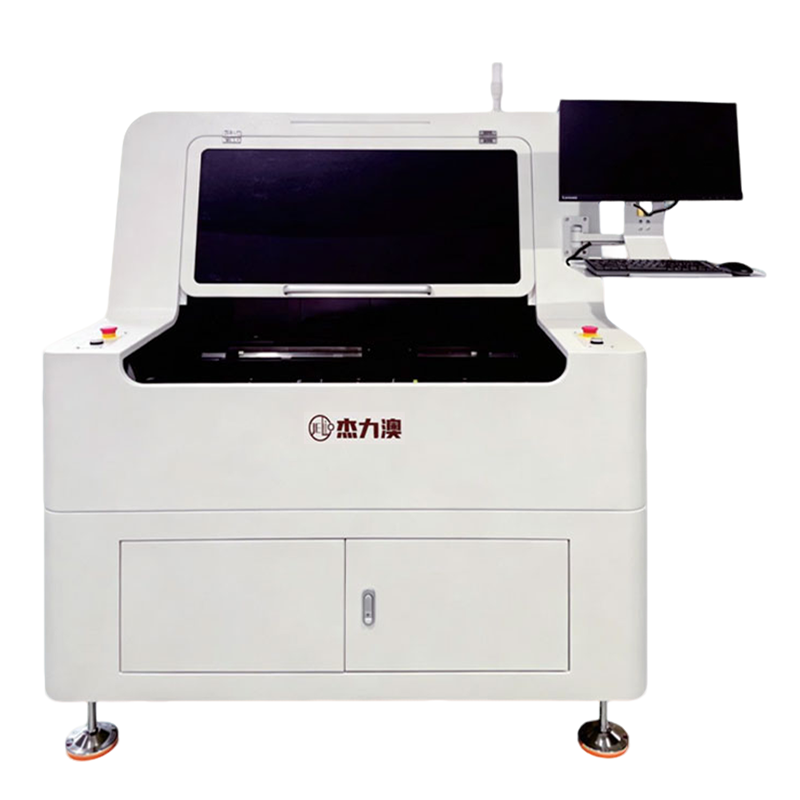
The report’s tray-loading and dispensing equipment references concern the surrounding workflow. Define where each operation belongs: panel arrival, depaneling, board pickup, tray placement or a downstream dispensing step. This avoids assuming that every peripheral function seen at an exhibition is part of a standard depaneling machine.
For tray handling, bring the receiving-tray drawing and board orientation. For dispensing, explain the actual material application and sequence to the technical team. Each subsystem should have its own equipment reference, required interfaces and acceptance questions. The peripheral equipment category provides the current JELIO pages to discuss.
A workflow view is consistent with the ASYS depaneling overview, which organizes machines alongside handling and data functions. Use that industry perspective to ask complete questions; the final JELIO quotation should still specify exactly which equipment and integration items are included.
| Subsystem | Question to ask | Project information to bring |
|---|---|---|
| Integrated cutting | Which outline segments use each tool? | Panel layout and component map |
| Vision | Which panel references are recognized? | Fiducial and datum information |
| Laser | Which material and model configuration will be trialed? | Stack information and released drawing |
| Tray handling | How is each board received and oriented? | Tray drawing and output requirements |
| Software | What data must be exchanged at each step? | Required record fields and system boundary |
Move from equipment discovery to an application shortlist
Select the two or three process options that address the real board rather than the entire demonstration portfolio. For each option, record why it remains on the shortlist and what could exclude it: envelope, component clearance, geometry, handling or inspection requirements. This makes the technical consultation more efficient and the eventual comparison easier to explain.
Arrange the next step through technical support with a drawing-led sample brief. JELIO lists sample cutting, process video, microscope edge analysis, dimensional verification and a machine recommendation report. State which questions those deliverables should resolve and who will review them.
Carry the chosen configuration, sample conclusions and remaining integration actions into the RFQ. A well-documented shortlist makes an exhibition visit useful long after the booth demonstration: your team can compare equipment for the same panel, the same operating sequence and the same acceptance requirement.
Three layers of a useful equipment demonstration
Compare the cutting mechanism
Match the actual model and options
Review the sample and acceptance criteria
Choose the demonstration question that fits the technology
| Technology | Useful demonstration focus | Next application check |
|---|---|---|
| Milling/router | Programmed contour and board support | Outline, components and sample edge |
| Integrated router/saw | Which segments use which tool | Tool approach and mixed-path fixture |
| Guillotine/V-cut | Straight scored separation and access | Groove layout and model-specific clearance |
| UV laser | Material path, extraction and receiving condition | Actual substrate and trial result |
| Peripheral handling | Board orientation and transfer sequence | Tray drawing and interface scope |
Published specifications for the application review
JLO-CXJ3235/JLO-CXJ4550: source catalog values for this product family.
| Parameter | Published value |
|---|---|
| Model | JLO-CXJ3235/JLO-CXJ4550 |
| Max. PCB Depaneling Size | 320mm(X)*350mm(Y)(per station)/450mm(X)*500mm(Y)(per station) |
| PCBA Component Height | Upper:10mm Lower:45mm |
| Cuttable PCBA Thickness | 0.5~4mm |
| Milling Cutter Tool Range | φ0.5~3mm |
| Saw Blade Tool Range | Saw blade thickness:0.3mm; diameter:100mm |
| Cutting Accuracy | ±0.05mm |
| Repeatability | ±0.02mm |
A drawing-led equipment discovery process
- 01
Map
Identify geometry and application needs.
- 02
Shortlist
Compare the relevant process families.
- 03
Observe
Record the demonstrated configuration.
- 04
Trial
Evaluate your actual material and panel.
- 05
Specify
Define equipment, peripherals and acceptance scope.
Frequently asked questions
Which depaneling equipment was described in the JELIO exhibition report?
The original report describes router, guillotine, laser and integrated systems, with demonstrations and discussions of router-saw cutting, multi-mark CCD compensation, tray loading and dispensing peripherals.
What is the main question when reviewing a router-saw demonstration?
Identify which panel segments use milling and which use the saw. Review the fixture, component clearance and receiving condition for the actual populated panel, using the selected model’s source specifications.
Does the CCD pixel specification establish finished-board dimensions?
Use camera compensation as part of the positioning review. Finished-board acceptance needs a drawing feature, datum, measurement method and sample result; the camera field does not replace those records.
Are all the peripheral systems included with a depaneling machine?
Treat trays, dispensing and other handling items as explicit project scope. Review the individual equipment pages and confirm which machines, options and interfaces are included in the written proposal.
How can I compare the proposed technologies on my own board?
Send the panel drawing, assembly layout, material information and acceptance objectives to JELIO technical support. Arrange a representative trial and compare results against the configuration for each shortlisted process.
Related equipment and guides
Explore equipment for your panel
Compare the real product families, then request a drawing-led application review.
Explore equipment for your panel →