

JELIO ENGINEERING INSIGHTS
PCB Depaneling MES: Defining a CSV Data Interface
A PCB depaneling MES CSV interface works only when the machine supplier and factory agree what each record means and when the receiving system accepts it. A file that opens in a spreadsheet may still identify the wrong panel, repeat an event or describe cutting completion while the board remains in the machine. This guide helps automation engineers turn the JELIO catalog entry for MES connection into a project interface brief. It separates published machine configuration from the fields, handoff rules and recovery tests that your factory should agree with its equipment and MES suppliers.
What should a PCB depaneling MES CSV interface define?
Define the producer and consumer, record identity, event meaning, field types, file-completion signal and acknowledgement. Then agree how rejected, delayed and repeated files are handled. Use representative panel and program revisions in a joint trial, and reconcile machine records with MES imports before approving the connection for production.
Start with the published connection and the required outcome
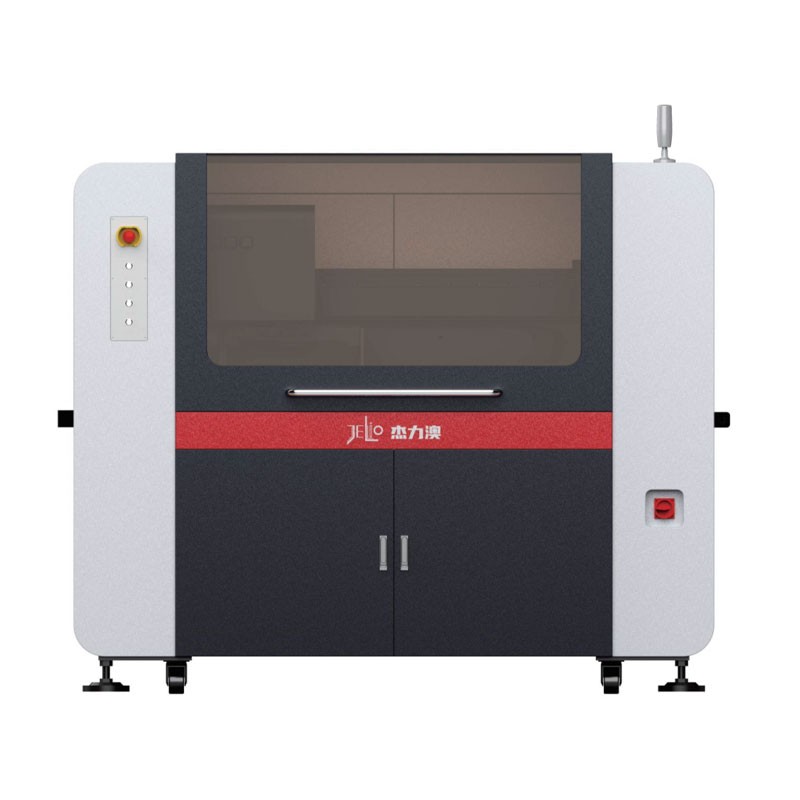
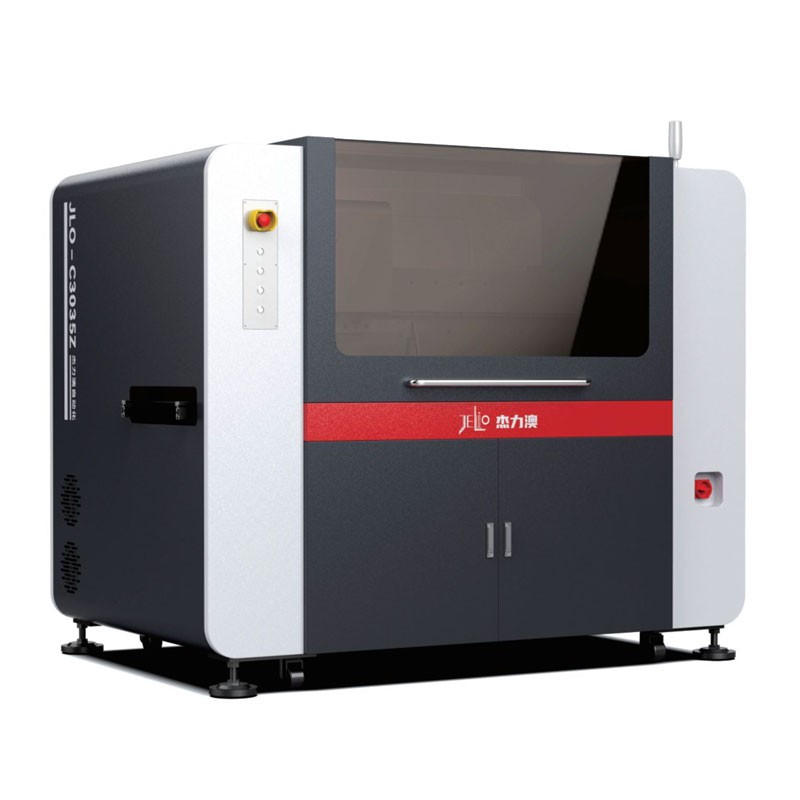
The JLO-C3532Z inline router lists MES CSV text format as standard and the barcode scanner as optional. Its page also describes QR-based program calling and carrier barcode verification. Use those statements to start the configuration discussion, then give each requested data exchange a purpose. A production record for a completed cutting operation, a request to select a program and an acknowledgement that the MES stored a record are different exchanges with different owners.
Write the desired factory outcome in one sentence before listing fields. For example, the factory may need to connect a panel revision to the cutting program used and the downstream tray handoff. Ask the machine supplier which events the quoted software can provide, and ask the MES team which events its importer expects. Resolve the difference in the interface document. Keep cutting acceptance and data acceptance separately visible in the project schedule.
Build a field dictionary before exchanging sample files
For each proposed column, write the meaning, source system, data type, required state and rejection rule. Preserve identifiers as text so that leading zeros survive import. Define whether a blank value means unavailable, not applicable or a failed read. Keep a panel identifier separate from a product part number: the first tracks a physical item, while the second describes a design shared by many items. A station name should also distinguish the two workstations where that distinction matters to investigation.
The following dictionary is a proposed discussion worksheet. The final column names and supported values must be agreed for the purchased configuration. Avoid adding fields simply because another machine exports them. An edge-inspection outcome needs its own source and inspection method; the completion of a routing program alone does not supply that outcome. Where the MES generates the authoritative work order or revision, describe how the equipment receives or references it.
| Candidate field | Meaning to agree | Owner or acceptance question |
|---|---|---|
| record_key | One logical production event | Which producer generates the key, and how is replay identified? |
| panel_id | Physical incoming panel | Which system issues the identifier and preserves leading zeros? |
| program_revision | Recipe actually selected | How is the released revision distinguished from a display name? |
| station_id | Workstation used | Is this required to distinguish the dual-station process? |
| event_type | Operation represented by the row | Does completion mean cutting finished or unloading finished? |
| occurred_at | Time of the represented operation | Agree format, timezone and clock synchronization responsibility. |
| result_code | Outcome of that operation | Agree values, stop conditions and where inspection results originate. |
Specify the file lifecycle as well as the CSV grammar
Agree encoding, delimiter, header presence, quoting, line endings and the treatment of empty fields. RFC 4180 documents common comma-separated formatting conventions, including quoted fields and embedded quotes. It is an informational format reference, not a manufacturing message definition. Attach a small test set that contains a comma inside a description, a quotation mark, a non-ASCII product name and an identifier beginning with zero. Have both teams inspect the imported values.
Next define how the consumer knows that writing has finished. One project may agree a temporary file followed by a ready name; another may use a separate completion signal. Record the supported mechanism rather than assuming either behavior. Specify the directory, naming rules, access permissions, archive owner and acknowledgement location. A reader seeing a filename is different from a reader successfully validating and committing every expected record. Agree when a file may be retried or moved to an error queue.
Make exceptions part of the joint acceptance trial
Run the normal sequence first with identified test panels and known program revisions. Count the produced events, accepted events and rejected events separately. Then deliberately test a repeated file, an interrupted write, a missing required identifier, an unexpected column version and a temporary consumer outage. Specify the expected state before each trial. A repeat should follow the agreed replay rule, while an incomplete file should remain pending or be rejected according to the documented handoff mechanism.
Reconciliation should explain every difference instead of treating the final row count as sufficient evidence. The same total can hide a missing panel and a duplicated panel. Compare the agreed event keys and panel identifiers across the producer log, transfer location and MES import result. After recovery, show which pending records were accepted and which require an operator decision. Keep the sample inputs and observed results with the software versions used for the trial.
| Case | Question to settle | Evidence to retain |
|---|---|---|
| Repeated delivery | Does a replay create a second logical event? | Same event key and importer decision |
| Interrupted write | How is the incomplete file excluded from processing? | Partial input and pending/reject state |
| Consumer unavailable | Who queues data and authorizes retry? | Outage interval, queue and recovery record |
| Missing panel identity | Does the operation wait, reject or enter an exception workflow? | Input row, operator action and final disposition |
| Schema revision change | Which versions can the consumer accept? | Versioned dictionary and compatibility result |

Keep factory protocols and physical handoff in their own scope
Modern depaneling suppliers describe several approaches to factory connectivity. ASYS lists standardized interfaces for specified DIVISIO systems, while Critical Manufacturing documents an ASYS socket integration with request and reply handling. These are useful examples of why the protocol and equipment version belong in an integration brief. They do not define the JELIO CSV interface. If the factory requests an additional protocol, list it as a separate engineering scope with its own acceptance criteria.
Review the physical output at the same time. A cutting-complete record can precede successful unloading, and a downstream buffer can delay collection after cutting has stopped. Decide which event the MES needs for each business decision. For identity relationships across separation, use the companion barcode traceability integration brief. For tray and transfer constraints, begin with the peripheral equipment catalog and the actual tray drawing.
Send a review package that both software teams can approve
Prepare a versioned interface brief containing the field dictionary, representative files, event sequence, file lifecycle and exception matrix. Name a machine-side owner, MES-side owner and factory acceptance owner. Record which team creates the importer and which team handles operating-system permissions, network access and support. Keep test credentials and customer production identifiers outside the public document. Use synthetic identifiers in the integration test pack, clearly separated from real production records.
Ask for a joint review of that package before the equipment purchase scope is finalized. JELIO describes software and hardware integration development on its company page, and its technical support service includes sample cutting with process documentation. Combine the application review with the data review, then retain the accepted interface revision alongside the machine configuration. Any later change to event meaning, naming or import behavior should trigger a focused compatibility check.
Three checkpoints in a file-based production record
Identify the actual operation and panel.
Apply the agreed ready signal and schema.
Return an acceptance or rejection decision.
Compare the three acceptance questions
| Boundary | A useful check | What to record |
|---|---|---|
| Cutting operation | Was the intended program completed? | Panel, recipe revision and operation outcome |
| File transfer | Was the complete input made available? | Filename or batch identity and ready signal |
| MES import | Were records validated and committed? | Accepted keys, rejected keys and reason |
| Recovery | Can the backlog be reconciled? | Replay decisions and remaining exceptions |
Published specifications for the application review
JLO-C3532Z: source catalog values for this product family.
| Parameter | Published value |
|---|---|
| Model | JLO-C3532Z |
| Number of Workstations | Dual Station |
| Max. PCB Depaneling Size | 350mm(X)*320mm(Y) (Single Station) |
| Loading & Unloading Method | Vacuum suction cup handling & transfer |
| Milling Cutter Replacement Method | Automatic tool change |
| MES Connection | MES CSV text format (standard), barcode scanner (optional) |
From catalog MES entry to an accepted data handoff
- 01
Define
Name the business event, owners and identifiers.
- 02
Map
Agree fields, grammar and the file-completion mechanism.
- 03
Trial
Test normal, rejected and interrupted exchanges.
- 04
Reconcile
Match event identities across equipment and MES.
- 05
Release
Retain the accepted dictionary and software versions.
Frequently asked questions
Does standard CSV support mean every MES can import the file unchanged?
The catalog establishes CSV support. Import mapping, event meaning and acknowledgement behavior should be agreed with the receiving MES team for the selected configuration.
Should the barcode be the record key?
A physical panel can generate several events. Define an event key separately from panel identity so that replay and repeated operations can be distinguished.
How can we avoid reading an unfinished file?
Agree a supported completion mechanism, such as an approved ready-name or completion signal, and demonstrate it during an interrupted-write trial.
Does a cutting-complete row mean the board passed inspection?
Cutting completion and inspection acceptance are separate events. An inspection result needs an identified inspection source and agreed criteria.
What should we send JELIO for an MES review?
Send the machine configuration, event sequence, proposed dictionary, representative synthetic files, importer requirements and exception tests. Include the panel and handling requirements.
Related equipment and guides
Discuss your MES interface brief
Share your proposed data contract, MES import requirements and panel-handling sequence for a configuration-specific integration discussion.
Discuss your MES interface brief →